
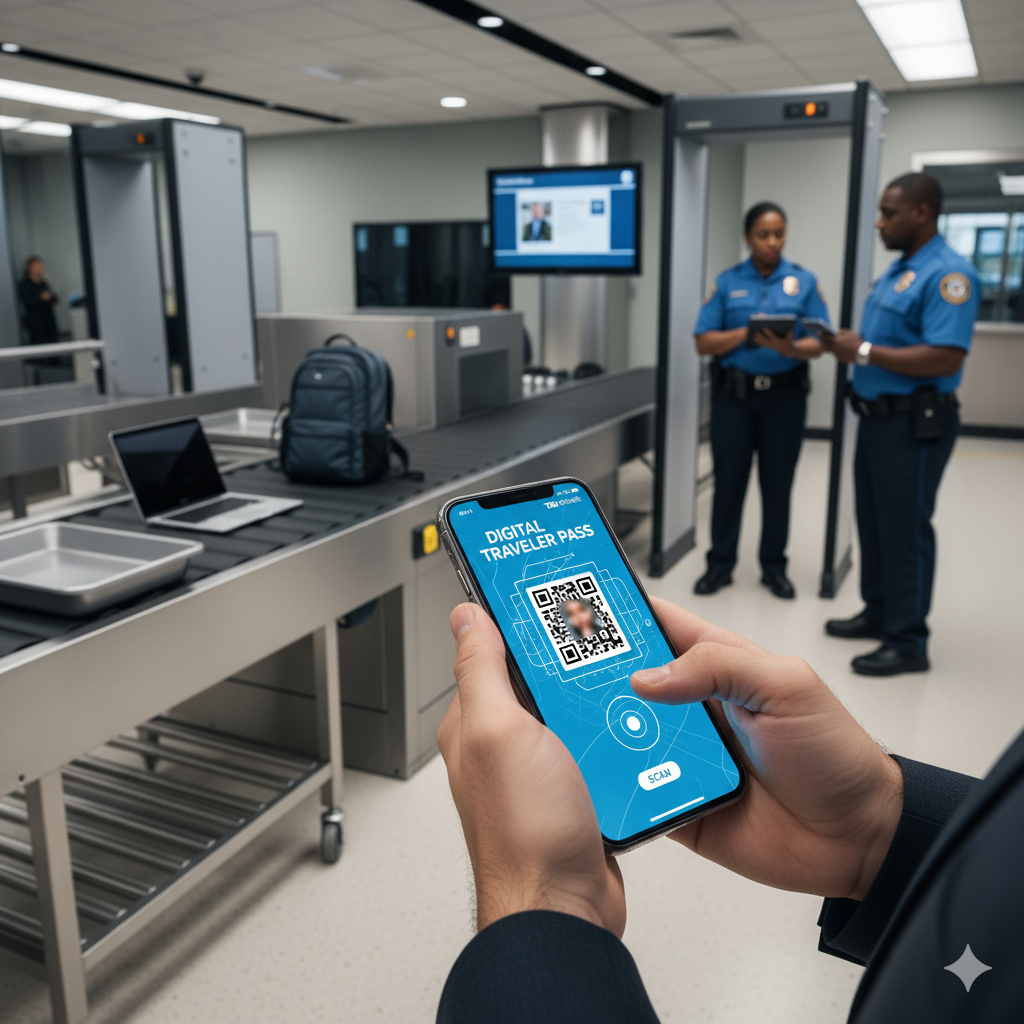
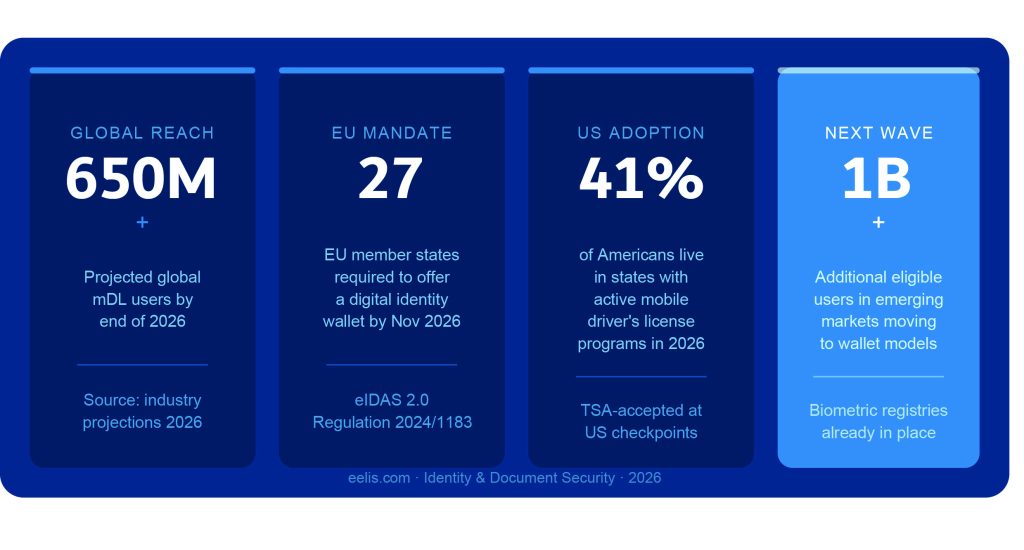
mobile driver’s license ID and government-issued digital identity wallets are no longer a pilot project. By the end of 2026, the European Union mandates that every member state offer a digital identity wallet to its citizens. In the United States, 41% of the population already lives in a state with an active mobile driver’s license program. More than 650 million people globally are projected to carry digital credentials on their smartphones before the year ends. The question facing national ID programs, transport ministries, and government agencies is no longer whether digital credentials are coming — it is whether their issuance infrastructure is ready.
This post explains what a mobile driver’s license (mDL) is, how ISO 18013-5 works, what the EU Digital Identity Wallet means for governments, and why the physical-to-digital credential lifecycle is the most critical layer that every national program must upgrade first.
What Is a Mobile Driver’s License (mDL)?
📌 Direct Answer A mobile driver’s license (mDL) is a government-issued digital credential stored on a smartphone that serves the same legal function as a physical driver’s license. It is secured by cryptographic standards, verified via NFC or QR code, and — in compliant programs — governed by the ISO 18013-5 international standard. |
Unlike a simple photo of your license stored in your phone’s camera roll, a proper mDL is a tamper-proof, cryptographically signed credential. It is issued by a government authority, bound to a specific device, and can be selectively presented — meaning a citizen can prove they are over 21 without revealing their home address or exact date of birth.
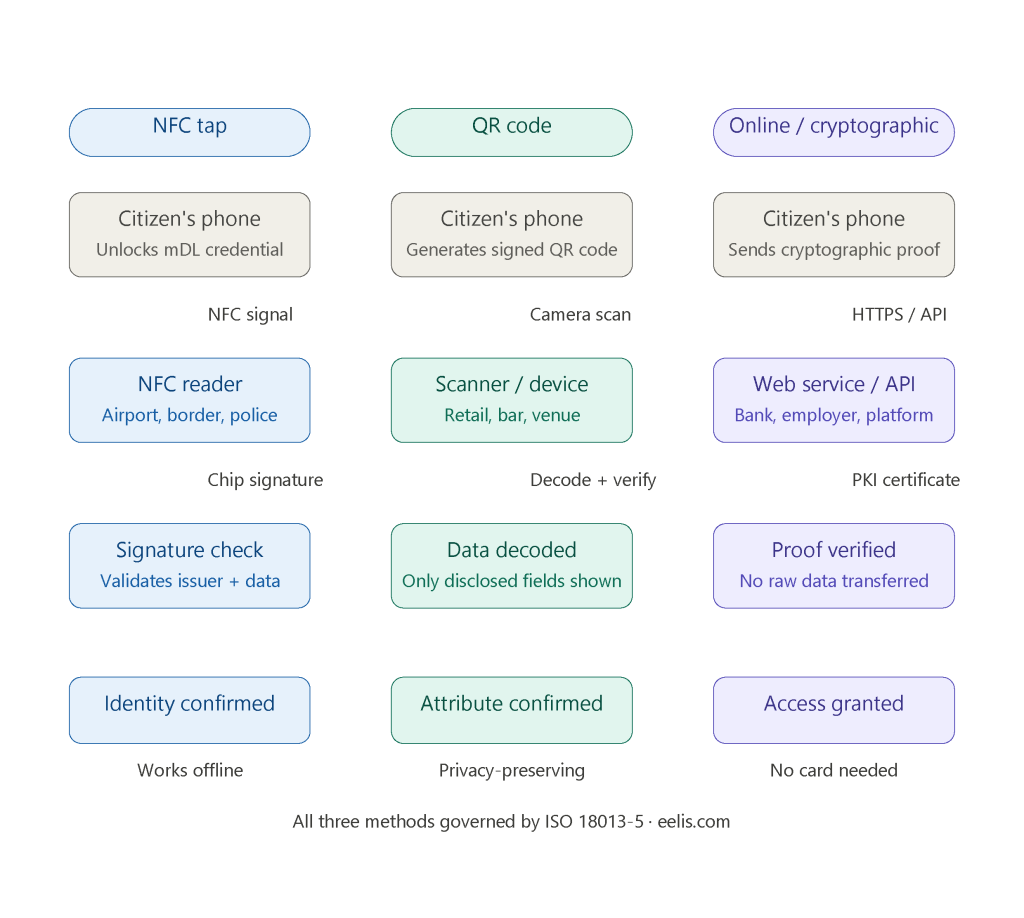
The credential is stored in a secure element or enclave on the device and verified using one of three methods:
- Device engagement via NFC (used at airport security checkpoints and law enforcement stops)
- QR code presentation (used at age-verification points such as retailers and bars)
- Online / server-side verification via cryptographic proof (used by digital services and private sector verifiers)
For governments issuing mDLs, the issuance system — the software and workflow that creates and signs the credential — is as critical as the wallet app the citizen uses. A poorly designed issuance pipeline creates fraudulent credentials at scale.
What Is ISO 18013-5 and Why Does It Matter for Governments?
📌 Direct Answer ISO 18013-5 is the international standard that defines how mobile driver’s licenses are structured, presented, and cryptographically verified. It ensures that an mDL issued in one country can be read and trusted by a verifier in another country, and that the data within it cannot be tampered with or forged. |
Published by the International Organization for Standardization, ISO 18013-5 builds on the existing physical driving license standard (ISO 18013-1) and defines the data model, security requirements, and communication protocols for digital credentials on mobile devices.
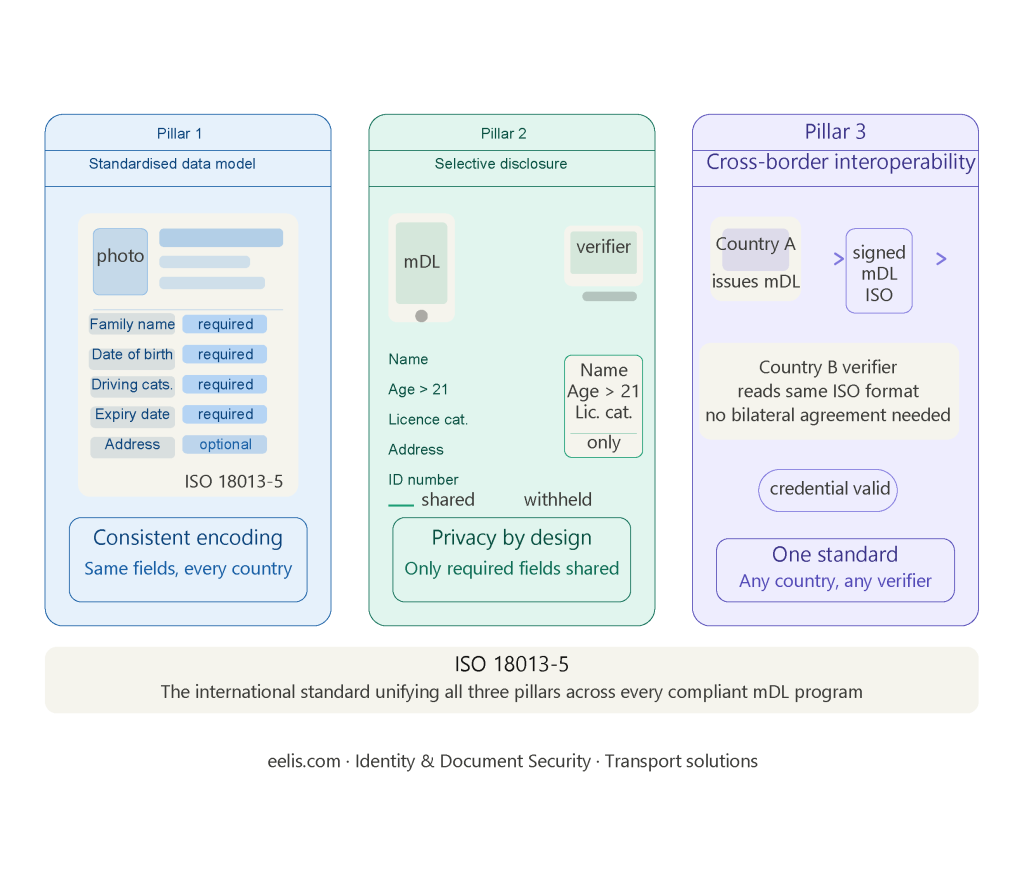
The Three Technical Pillars of ISO 18013-5
- The data model. ISO 18013-5 defines exactly which data fields an mDL must carry (family name, given name, date of birth, portrait, driving categories, expiry date) and how they are encoded. This prevents inconsistencies between different countries’ implementations.
- Selective disclosure. This is the most privacy-significant feature. A citizen presenting their mDL at a bar does not need to hand over their full driving record, address, or licence number — only the fields the verifier is legally permitted to see. ISO 18013-5 enforces this at the cryptographic level, meaning the citizen’s device cannot inadvertently share more than requested.
- Cross-border interoperability. Because all compliant mDL programs use the same data format and verification protocol, a police officer in Germany can verify an ISO 18013-5-compliant mDL issued in South Korea, the UAE, or California — without a bilateral agreement or dedicated reader.
Why this matters for your procurement decisions Any mDL or digital credential system you procure for a national program should explicitly state ISO 18013-5 compliance. Without it, your credentials will be limited in interoperability, will not meet the EU’s eIDAS 2.0 technical requirements, and may need costly re-engineering when international standards enforcement tightens. |
The EU Digital Identity Wallet: What It Means for National Programs in 2026
📌 Direct Answer The EU Digital Identity Wallet (EUDI Wallet) is a mobile application that every EU member state must offer to citizens by November 2026, as required by the eIDAS 2.0 regulation (Regulation EU 2024/1183). It enables citizens to store and present verified digital credentials — including national ID, driving license, and professional qualifications — across all EU countries and private sector services. |
For governments that have not yet started their EUDI Wallet implementation, November 2026 is not a future deadline — it is an imminent one. National identity agencies need to take action on several fronts simultaneously.
What National Agencies Must Deliver by November 2026
- A wallet application (or integration with a certified third-party wallet) that meets eIDAS 2.0 Level of Assurance High (LoA High)
- A Person Identification Data (PID) provider: the government-authorized system that issues cryptographically signed identity assertions into the wallet
- PKI infrastructure: a Public Key Infrastructure capable of signing Qualified Electronic Attestations of Attributes (QEAAs)
- An enrollment process that captures biometric data at the quality required for LoA High verification
- Acceptance at relying parties: large online platforms and critical public services must accept EUDI Wallet credentials
The most critical — and most frequently underestimated — component is the last bullet before the wallet itself: the issuance and enrollment system. Governments that have modern, standards-compliant document management infrastructure can plug into the EUDI Wallet framework with relative ease. Those running legacy systems face a two-layer problem: they must modernize issuance at the same time as deploying a wallet.
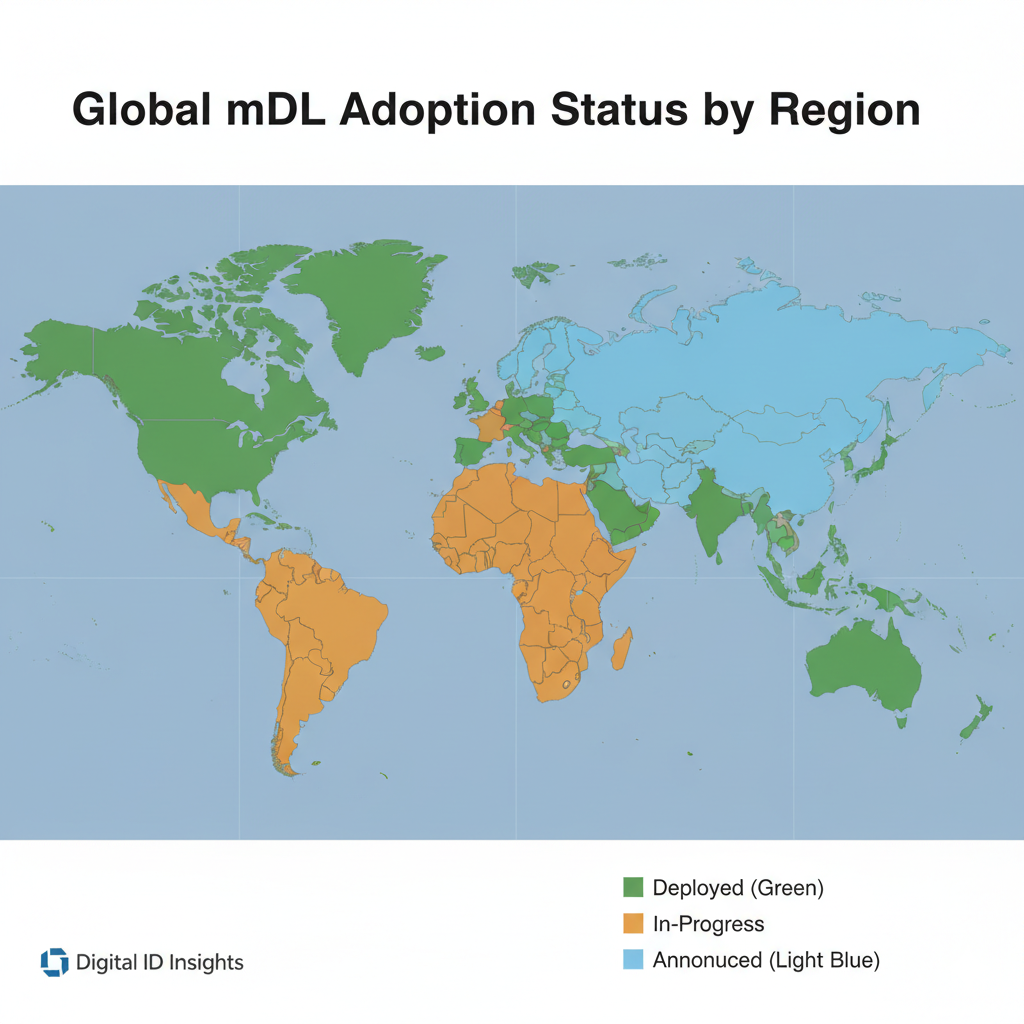
Global mDL and Digital Wallet Adoption: 2026 Snapshot
Region | Status | Key Deadline / Milestone |
European Union | eIDAS 2.0 mandate active; EUDI Wallet pilots across 27 member states; Schengen digital visa transition underway | November 2026: all member states must offer EUDI Wallet |
United States | Active mDL programs in 30+ states; TSA accepting mDLs at checkpoints; California has 3.5M+ active mDLs | REAL ID deadline passed; federal mDL framework developing |
United Kingdom | GOV.UK Wallet live for Veterans’ Card; digital driving license pilot in testing | Digital driving license national rollout expected 2026–2027 |
Middle East & Gulf | Smart identity infrastructure scaling rapidly; government-backed digital ID programs active in UAE, Saudi Arabia, Qatar | National programs aligned with ICAO and ISO standards |
Emerging Markets | ~1 billion additional users projected; large biometric registries being leveraged for wallet models | Phased rollouts tied to national digital transformation plans |
The Physical-to-Digital Credential Lifecycle: Why Issuance Is the Foundation
📌 Direct Answer A digital identity credential is only as trustworthy as the enrollment and issuance process that created it. Digital wallets do not replace physical issuance infrastructure — they depend on it. Every mDL and digital ID wallet credential begins life in a secure issuance system where biometric data is captured, documents are personalized, and cryptographic signatures are applied. |
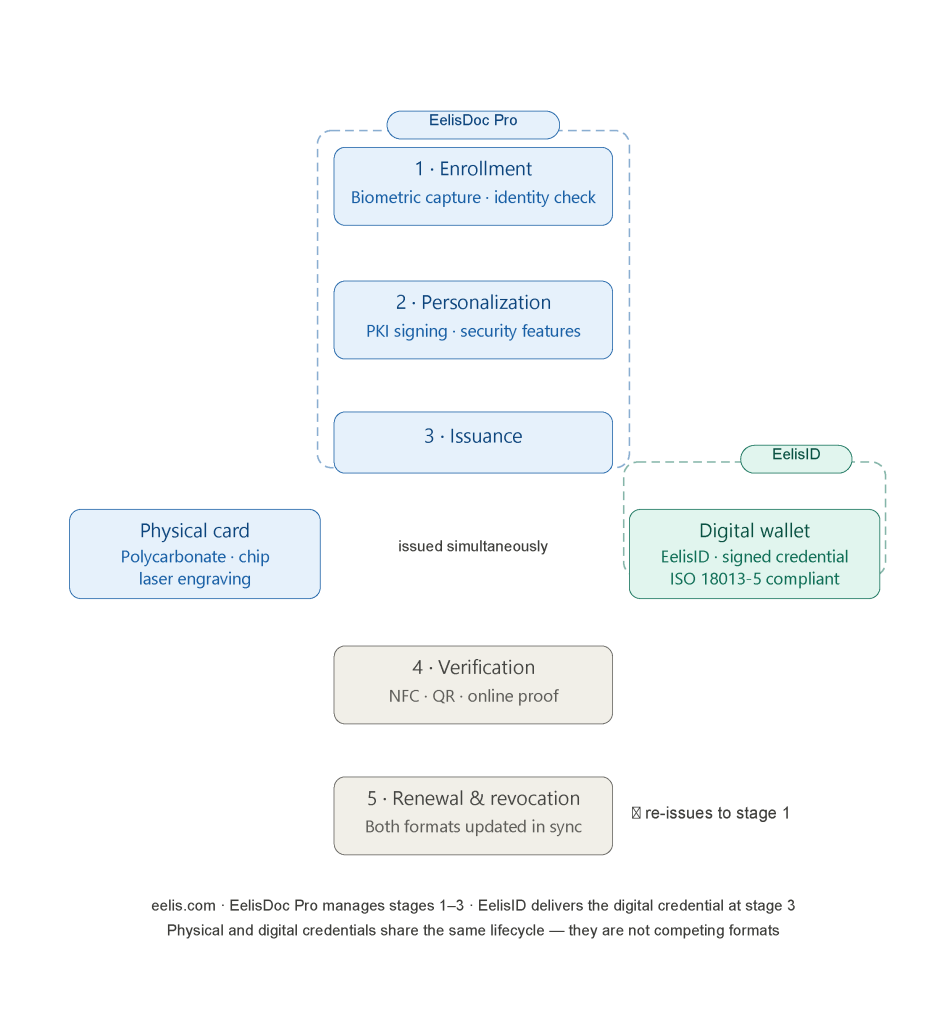
The most common misconception in digital identity transformation is that deploying a mobile wallet replaces the need for a secure physical issuance system. It does not. The lifecycle of a trusted credential — whether a polycarbonate driving license, a biometric passport, or a digital wallet entry — follows the same five stages:
The Five Stages of the Credential Lifecycle
Stage 1: Enrollment. The citizen presents themselves in person (or via a secure remote process). Biometric data is captured — facial portrait, fingerprints, signature. Identity documents are verified. Background checks are run. The quality of this enrollment step is the single biggest determinant of the credential’s long-term integrity.
Stage 2: Personalization. The captured data is bound to a physical card or digital credential. For physical driving licenses, this means laser engraving on polycarbonate, chip programming with PKI-signed biographic data, and printing of security features. For digital credentials, this means cryptographic signing of the data payload by the issuing authority’s key.
Stage 3: Issuance. The finalized credential is delivered — either as a physical card sent to the citizen, or as a digitally signed credential provisioned directly into the citizen’s wallet app. Modern programs do both simultaneously, creating a physical card and a digital twin.
Stage 4: Verification. At the point of use, a verifier reads the credential — via NFC chip, QR code, or optical scan — and cryptographically confirms its authenticity, validity, and the identity of the presenting citizen.
Stage 5: Renewal and Revocation. Credentials have expiry dates. When a license expires, is suspended, or a citizen’s status changes, the credential must be revoked in real time across all formats — physical and digital.
The critical insight for government procurement Stages 1–3 — enrollment, personalization, and issuance — are where most digital transformation projects fail. Governments that rush to deploy wallet apps without upgrading their issuance infrastructure are building digital credentials on an unreliable foundation. Poor biometric quality at enrollment produces credentials that fail liveness checks. Inadequate PKI produces credentials that cannot be verified cross-border. Weak issuance workflows produce cards that are tampered with before delivery. |
How Eelis Bridges Physical Issuance and Digital Identity
Eelis is a European company that provides governments and private entities with end-to-end physical and digital document security solutions. The product portfolio spans the full credential lifecycle described above — from physical card manufacturing to digital identity app.
EelisDoc Pro: The Issuance Engine
EelisDoc Pro is Eelis’s advanced Document and Card Issuance and Process Management System. It handles Stages 1 through 3 of the credential lifecycle: enrollment workflow, document personalization, template management, and issuance. It is designed to issue driving licenses, national identity cards, passports, and other government credentials at scale.
Key capabilities relevant to mDL programs include:
- Drag-and-drop workflow designer with AI-powered automation, decision trees, and parallel processing for high-volume issuance
- Dynamic security features per template: ghost images, UV-visible personalization, encrypted QR seals, and laser engraving support
- Certificate Validation Portal for real-time credential verification by employers, agencies, and relying parties
- RESTful API integrations for connecting with biometric systems (AFIS), PKI infrastructure, and digital wallet provisioning platforms
- Full audit trail and lifecycle tracking for every credential issued
EelisID: The Digital Credential
EelisID is Eelis’s virtual identity card solution — a credential stored in a mobile wallet and validated through a dedicated mobile application. It covers the most common use cases that governments are now deploying:
- National identity cards
- Mobile driver’s licenses
- Student ID and education credentials
- Election cards
- Temporary ID for newly enrolled citizens or workers
- Access and membership cards
EelisID is the digital layer that sits on top of the issuance infrastructure provided by EelisDoc Pro. Together, they form the physical-to-digital credential pipeline that any national ID program needs to support both traditional card-based verification and modern wallet-based presentation.
Physical Driving Licenses: ISO-Compliant Cards with Built-in Digital Readiness
For governments that still issue physical driving licenses — which is all of them, even those adding digital credentials — Eelis’s Transport solutions produce polycarbonate cards that meet international security standards:
- ISO 7810 / 7812 / 7816 / 7813 / 10373 compliant card formats
- Polycarbonate, PET, PVC, and composite card structures
- Laser personalization with optional dye sublimation overlay
- Chip programming with PKI-signed biographic data for NFC-based verification
- Security printing: holograms, reactive inks, micro-printing, anti-copy technology, shape memory polymer features
Is Your National ID Program Ready? A 2026 Readiness Checklist
Before your government issues a single digital wallet credential, use this checklist to assess whether your foundational infrastructure is ready.
Issuance Infrastructure
- Your document and card issuance management system is capable of outputting ISO 18013-5-compliant data payloads
- Your enrollment workstations capture biometric portraits at the resolution and quality required for LoA High verification (ICAO 9303 compliant)
- Your issuance workflows include automated quality control gates that reject substandard biometric captures before they reach a credential
- Your issuance system supports parallel physical and digital output (card production + wallet provisioning from a single workflow)
PKI and Cryptographic Security
- Your PKI infrastructure can sign Qualified Electronic Attestations of Attributes (QEAAs) as required by eIDAS 2.0
- Your national root certificate is registered or in the process of being registered with the EU Trust Framework
- You have a certificate revocation infrastructure (CRL or OCSP) that operates in real time
Digital Wallet Readiness
- You have selected or developed a wallet application that meets eIDAS 2.0 Level of Assurance High requirements
- Your wallet app supports selective disclosure as defined in ISO 18013-5 and the OpenID4VC protocol
- You have a citizen onboarding process that securely binds the wallet credential to the correct, verified individual
Lifecycle Management
- You have a renewal workflow that handles both physical card replacement and digital credential re-issuance
- Your revocation process reaches both the physical card (chip invalidation) and the digital wallet credential simultaneously
- Your system generates a full audit trail that satisfies data protection regulations (GDPR in the EU) for every credential lifecycle event
2026 national ID program readiness checklist — interactive self-assessment across four categories: issuance infrastructure, PKI security, digital wallet readiness, and lifecycle management.
Conclusion: The Wallet Era Requires a Better Foundation, Not Just a New App
The global shift to mobile driver’s licenses and digital identity wallets is not a distant transformation. It is a 2026 operational requirement for governments across the EU, and a competitive and security imperative for every other national program that wants its credentials to remain trusted and interoperable internationally.
The governments that will navigate this transition successfully are not necessarily the ones who move fastest to publish a wallet app. They are the ones who recognize that a digital credential is the output of a secure, standards-compliant, biometrically-anchored issuance process — and that upgrading that process is the first and most important step.
Physical and digital are not competing approaches to identity. They are the same credential lifecycle, described at different points in time. Investing in a modern issuance system today means your physical driving licenses, national ID cards, and digital wallet credentials all share the same trustworthy foundation.
Is your national ID program ready for the wallet era? Eelis works with governments and private entities worldwide to deliver end-to-end document and identity security solutions — from ISO-compliant physical driving licenses and biometric passports to digital wallet credentials via EelisID. If your program is preparing for mDL deployment, EUDI Wallet compliance, or a full credential lifecycle upgrade, our team is ready to help. Book a free demo at eelis.com. |
Frequently Asked Questions
The following questions are written to match the language that government procurement officers, IT directors, and policy makers use when searching for information about mDL and digital identity wallet programs. Each answer is designed to be a complete, self-contained response.
What is a mobile driver’s license (mDL) and how is it different from a physical license?
A mobile driver’s license (mDL) is a government-issued digital credential stored on a smartphone that carries the same legal weight as a physical driving license. Unlike a scanned image or photo of a license, a proper mDL is cryptographically signed by the issuing authority, bound to the citizen’s specific device, and structured according to ISO 18013-5, the international standard for mobile driving licenses. It can be verified offline via NFC, online via cryptographic proof, or via QR code, and supports selective disclosure so that citizens share only the data required for a specific transaction.
What is ISO 18013-5 and does my government program need to comply with it?
ISO 18013-5 is the international standard published by the International Organization for Standardization that defines the data model, communication protocols, and security requirements for mobile driver’s licenses. If your country is issuing or planning to issue mobile driving licenses that will be accepted internationally — including at international borders, airports, and by foreign relying parties — ISO 18013-5 compliance is not optional. The EU’s eIDAS 2.0 framework also requires that mobile credentials meet equivalent technical standards for interoperability across member states.
What is the EU Digital Identity Wallet (EUDI Wallet) and when is the deadline?
The EU Digital Identity Wallet (EUDI Wallet) is a mobile application that every EU member state is required to offer to its citizens under the eIDAS 2.0 regulation (Regulation EU 2024/1183). The deadline for all 27 member states to make the wallet available is November 2026. The wallet must support Level of Assurance High (LoA High) and must be accepted by large online platforms, government services, financial institutions, and other regulated sectors across the EU. Citizens can store national IDs, driving licenses, educational qualifications, and other government-issued credentials in the wallet.
Do digital wallets replace physical driving licenses?
No. Digital wallets do not replace physical driving licenses — they extend and complement them. Physical cards remain the primary credential in many verification contexts, particularly those involving offline or low-connectivity environments, emergencies, or law enforcement scenarios where electronic devices may not be accepted. More importantly, digital wallet credentials are generated from the same enrollment and issuance process as physical cards. A government that does not have a secure, standards-compliant issuance system cannot produce trustworthy digital credentials. The physical-to-digital transition is a lifecycle upgrade, not a format replacement.
What does a government need to implement an mDL or EUDI Wallet program?
To implement a mobile driver’s license or EU Digital Identity Wallet program, a government needs: (1) a standards-compliant issuance system capable of producing ISO 18013-5-compatible data payloads and handling both physical and digital credential output; (2) biometric enrollment infrastructure that captures data at the quality required for high-assurance verification; (3) a Public Key Infrastructure (PKI) that can sign and verify digital credentials; (4) a wallet application (or integration with a certified third-party wallet) that meets eIDAS 2.0 LoA High requirements; and (5) a lifecycle management system for renewal, revocation, and audit. Missing any one of these components creates a security or compliance gap.
What is EelisID and how does it relate to mobile driver’s licenses?
EelisIDis Eelis’s digital identity card solution — a virtual credential stored in a mobile wallet and verified via a dedicated application. It supports national identity cards, mobile driver’s licenses, student IDs, election cards, access cards, and temporary IDs. EelisID is designed to work alongside EelisDoc Pro, Eelis’s advanced document and card issuance management system, so that governments can manage both physical and digital credentials from a single integrated platform.
How does Eelis support governments with driving license issuance?
Eelis provides end-to-end driving license solutions for governments worldwide. On the physical side, Eelis supplies ISO-compliant polycarbonate and composite driving license cards with laser personalization, chip programming, and advanced security features including holograms, reactive inks, ghost images, and micro-printing. On the digital side, Eelis’s EelisDoc Pro manages the full issuance workflow including enrollment, personalization, document lifecycle management, and API integration with PKI and biometric systems. EelisID provides the digital wallet credential layer for programs moving toward mobile licensing.
What is the difference between eIDAS 1.0 and eIDAS 2.0?
eIDAS 1.0 (2014) established a framework for electronic identification in the EU, but participation was voluntary for member states and use was largely limited to public sector services. eIDAS 2.0 (2024) makes digital identity wallets mandatory for all 27 EU member states, extends coverage to private sector services, mandates Level of Assurance High for identity verification, introduces Qualified Electronic Attestations of Attributes (QEAAs) for credentials such as degrees and professional licenses, and requires selective disclosure — allowing citizens to share only the minimum data needed for a specific transaction.